
Biman Orders Airbus Jets in a Strange Pivot
Biman Bangladesh Airlines just placed one of the more bizarre aircraft orders we’ve seen this year.


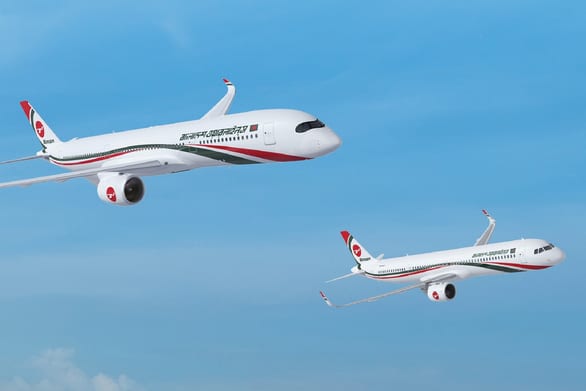
Biman Bangladesh Airlines just placed one of the more bizarre aircraft orders we’ve seen this year.
The Bangladeshi flag carrier has signed a firm order for four Airbus A350-900s and six A321neos. And in its press release, Airbus described the combination of the A350 and A321neo as the “perfect fleet strategy” for Biman.
I’m not sure I agree, for a couple of reasons.
For starters, Biman is already a pretty heavily Boeing-oriented airline. Its long-haul fleet is built around the 787 and 777, while its narrow body operation uses the 737-800. In fact, Biman hasn’t operated an Airbus aircraft since retiring its last A310 more than a decade ago.
Now, the idea of bringing Airbus back into the fleet isn’t crazy in a vacuum. We’ve seen plenty of historically Boeing-heavy operators add Airbus jets in recent years, either to hedge against Boeing’s struggles or to fill performance gaps in its current lineup (most notably, the lack of a true competitor to the A321XLR).
But most of those carriers are huge, well-funded operations that can absorb the added complexity of bringing another OEM into the mix. Biman certainly isn’t that.
The airline is tiny, with fewer than 20 jets in its fleet today. It’s at that small-scale where things like fleet commonality become especially valuable. Bringing on two entirely new aircraft types from a new manufacturer - and doing so in relatively small numbers - risks adding a lot of cost and complexity very quickly.
What’s even stranger is that - over the past several months - Biman has also been ordering a handful of new Boeing jets. Earlier this year, the airline committed to additional 787 Dreamliners and 737 MAXs, effectively doubling down on the exact aircraft families already at the core of its fleet.

Put everything together and Biman now has outstanding orders for:
13 Boeing 787-10s
2 Boeing 787-9s
10 Boeing 737 MAX 8s
4 Airbus A350-900s
6 Airbus A321neos
To me, that is a very strange mix.
Not only are there obvious areas of overlap - the 787-10 and A350-900, for example, are going to compete for many of the same long-haul missions - but Biman is now going to have to make some pretty tough decisions about how and where to deploy these airplanes most effectively. It also complicates crew training and scheduling, maintenance planning, spare parts, and fleet recovery. If, say, one of just four A350s goes into the shop for an extended maintenance event, that suddenly takes a huge chunk of that fleet out of service.
The whole situation is a bizarre one, and I think it’s safe to say this isn’t how most people would suggest scaling a small carrier.