Starlink Is Becoming a Problem for Delta
American Airlines is going all-in on Starlink. And it’s making Delta’s decision to hold out look more and more puzzling.


American Airlines is going all-in on Starlink. And it’s making Delta’s decision to hold out look more and more puzzling.
American announced that it plans to install Starlink across its entire mainline fleet of more than 1,000 aircraft, dramatically expanding on its original plan to only equip around 500 of its narrowbody jets. This makes it just the latest in a string of airlines to jump onboard the Starlink train.
United is rapidly installing Starlink across its fleet. Southwest will soon be bringing it online too, as will Alaska. And internationally, airlines like Qatar Airways have deployed the tech at an absolutely blistering pace.

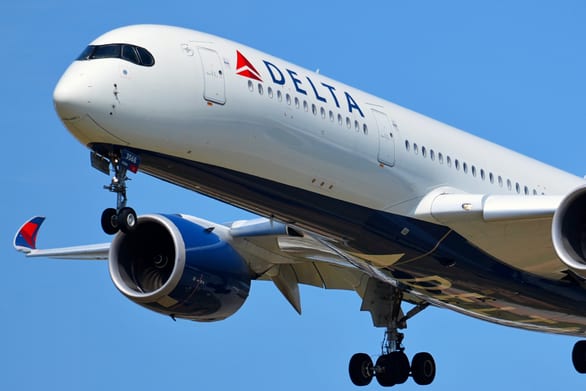
This rapid industry shift is increasingly leaving Delta behind. Now, Delta already offers connectivity across most of its fleet, and was actually one of the first major carriers to make Wi-Fi free for loyalty members. But rather than build on that early lead and become an early adopter of Starlink, it’s holding out until Amazon’s competing “Leo” network is ready.
On paper, Leo should be pretty dang good. It uses the same basic low-Earth-orbit satellite architecture that makes Starlink so effective, promising high speeds and much lower latency than traditional satellite Wi-Fi. But it trails Starlink significantly in maturity. While Starlink already has thousands upon thousands of satellites in orbit and is actively being used on commercial airplanes around the world, Amazon Leo has just over 250 satellites up today and still needs to build out a constellation of thousands more. That makes Delta’s planned 2028 rollout feel pretty ambitious.
Starlink also has a leg up on certification and installation. While Amazon Leo has yet to be approved for use on passenger jets, Starlink has. Not only that, but actually installing the equipment on an airplane can be a surprisingly quick process. Qatar Airways, for example, is able to install Starlink on a Boeing 777 in just 9.5 hours. That means a jet could basically go into maintenance overnight and come back out equipped with Starlink the next morning.

All of this is becoming more and more of a liability for Delta. Most of the time, passengers feel relatively little difference between the actual flying experience on competing carriers. But having - or not having - Starlink is VERY noticeable.
You can keep working, stream video, scroll social media, upload files - basically use the internet like you would on the ground. And that gives passengers an actual, tangible reason to pick one airline over another.
United is already hitting this point pretty dang hard. The airline has launched an entire status-match campaign centered around its Starlink connectivity, explicitly trying to woo Delta and American loyalists with the tagline: “Don’t keep buffering: switch to United and get the fastest Wi-Fi in the sky.”

American is clearly feeling the pressure and has responded accordingly. But Delta remains unmoved. And as a result, it’s now the only U.S. network carrier that doesn’t plan to adopt it. The big question now is: how long can Delta feel the squeeze before it finally starts reconsidering its approach?
I have a feeling we’re going to find out sooner rather than later.