
Why Virgin & Iberia Refused to Give Up on the A340-600
In a recent article, we explored why Lufthansa managed to keep the Airbus A340-600 flying for nearly 23 years, long after most other airlines had retired the type. Despite being…


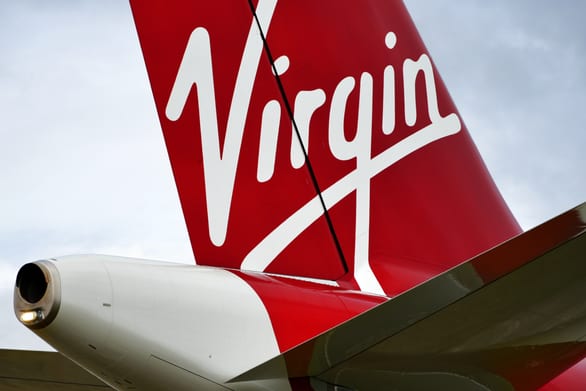
In a recent article, we explored why Lufthansa managed to keep the Airbus A340-600 flying for nearly 23 years, long after most other airlines had retired the type. Despite being something of a commercial failure, the giant four-engine jet was unusually well suited to Lufthansa's premium-heavy long-haul network.
But Lufthansa wasn't the only airline that found a good reason to hang onto these notoriously inefficient jets. Virgin Atlantic and Iberia also managed to keep their A340-600s flying until 2020, and for two very different reasons.
Let’s explore Virgin Atlantic, who had planned to phase out the type in the mid 2010s. However, they ultimately held onto the -600 largely because of its reliability.

When we talk about commercial jets, we too often get bogged down focusing on fuel economy. Having an efficient airplane is certainly nice, but if that plane can't stay in the air it's really not worth much. In many cases, reliability and availability are just as important as efficiency.
These were things that Virgin Atlantic struggled with mightily in the late 2010s. The airline had invested heavily in the Boeing 787 Dreamliner to replace their A340s, and with 25% better efficiency it looked like a solid option. But engine woes prevented these new swanky wide bodies from carrying out consistent service.

Virgin chose the Rolls-Royce Trent 1000 to power its Dreamliners - an engine type that suffered from major durability issues. And throughout much of the 2010s, the airline had to ground much of its 787 feet for extended inspections and repairs. This made the availability of its Dreamliner fleet frustratingly unpredictable.
Virgin's A340-600s - by contrast - were a known and reliable commodity. The airline had been flying the A340 family for decades, and its maintenance teams had extensive experience managing both it and its sister A330. This reliability helped keep Virgin afloat during a rocky period, as Virgin repeatedly extended their A340’s service lives to preserve capacity while its Dreamliner underwent repairs. It wasn’t until 2020 - when COVID led to a collapse in travel demand - that the type was finally phased out.
Iberia, meanwhile, held onto the A340-600 for a completely different reason: its specialized performance. A huge portion of Iberia's long-haul network is focused on Latin America, including destinations like Bogotá, Mexico City, Quito, and San José. These cities are what the aviation industry calls "hot-and-high" destinations, where high airport elevations and warm temperatures can significantly reduce an aircraft's takeoff performance.
That's especially relevant for an airline like Iberia, whose flights back to Madrid can last more than 10 hours. To make these journeys, its aircraft have to haul a huge amount of fuel, and all that extra weight can make taking off from an airport with thin air particularly challenging.

This is one of those rare cases where the A340-600's four engines are actually an advantage. When an aircraft loses an engine during takeoff, it still needs to be able to climb safely. When a twin-jet loses an engine, it loses 50% of its available engines. Meanwhile, if a a quadjet loses one, it loses just 25% of its available thrust. While actual performance depends on the aircraft and conditions, this can give four-engine jets a leg up on demanding departures.
In Iberia’s, this meant its A340-600 could operate certain routes with fewer restrictions on passengers and cargo than some of its twin-engine alternatives. In fact, Iberia explicitly acknowledged this advantage in a 2014 investor presentation, explaining that it intended to keep the A340-600 on its hot-and-high routes until a suitable next-generation replacement became available.
Eventually, that happened. The arrival of the Airbus A350-900 finally gave Iberia a far more efficient aircraft capable of handling these demanding missions. Combined with the collapse in travel demand during the pandemic, that sealed the A340-600's fate. Fittingly, Iberia's final scheduled A340-600 flight took place on August 1, 2020, from Quito to Madrid — one of the very routes where the jet's unique capabilities had proved so valuable.

Ultimately, neither Virgin Atlantic nor Iberia kept flying the A340-600 because it was particularly economical. Virgin needed an aircraft it could rely on when its newer jets couldn't stay in the air, while Iberia needed one capable of performing some of its most challenging missions. But in both cases, the A340 proved to be an undeniable asset.